
Speed to power · Inference management
Get AI compute on power, then keep it there
Synop finds the headroom in sites you already have, energizes GPU load with storage and flexible interconnection, and orchestrates inference against site limits, prices, and grid events
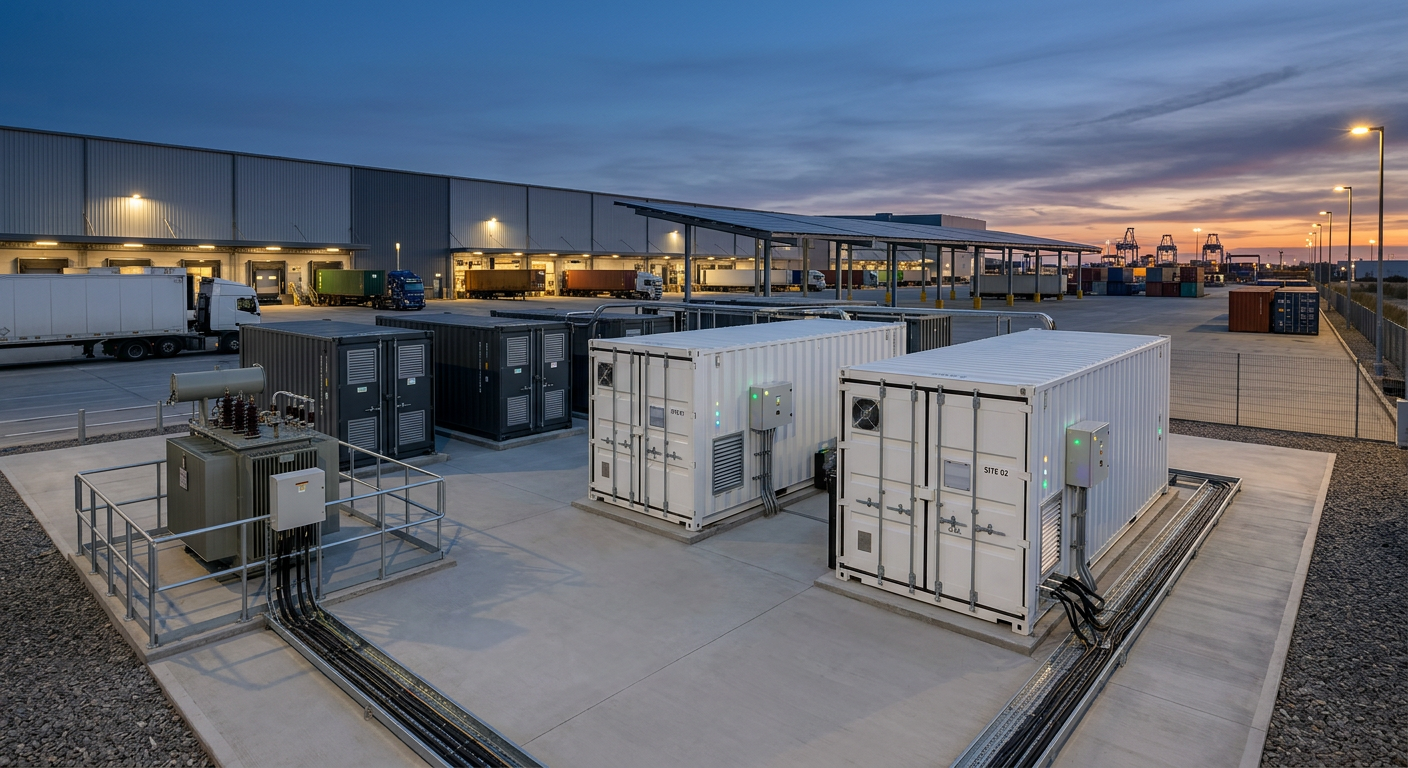
- To first GPUs energized on existing service, not years in a queue
- ~9 mo
- Of workload flexibility, each with its own grid rules
- 4 tiers
Speed to power
The bottleneck for AI is not chips. It is interconnection.
Utility queues for new large loads now run five years or more. Most commercial and industrial sites use a fraction of the service they already pay for. Synop measures that headroom, firms it up with storage, and gets GPUs drawing power while the long-lead upgrade catches up.
Where the megawatts come from
The building and the depot are already on the meter. Shape them, and the GPUs fit.
Utilities size headroom against your coincident peak. Uncontrolled depot charging and an unshaped HVAC load eat most of it. Synop pre-cools the building, paces each vehicle to its departure time, and holds the site under the limit, so the same service carries twice the compute.
Existing service: 4.0 MWBESS covers the residual peak
Whole-site orchestration
One meter. Building, fleet, and GPUs behind it.
Compute rarely arrives on an empty site. Synop orchestrates the building and the depot that already share the service, alongside every workload tier from your scheduler. Each load has its own constraint: setpoints for HVAC, departure times for vehicles, latency for tokens. When the grid tightens, flexible load yields first and the battery covers the rest.
- Building1400 kW
- EV charging450 kW
- Compute2000 kW
Building
- Base buildingLighting, plug, process. Fixed.900 / 900 kW
- HVACPre-cools, then coasts within setpoint band.500 / 500 kW
EV charging
- Fleet depot chargingEvery vehicle at target SOC by departure.450 / 600 kW
Compute
- Real-time inferenceProtected. Never curtailed.700 / 700 kW
- Interactive batchDefers by minutes.450 / 450 kW
- Offline batch & evalsShifts by hours.500 / 500 kW
- Checkpointed trainingPauses on events.350 / 350 kW
- Grid import
- 4.00 MW
- Battery
- -150 kW
- Supplied by
- Grid
Running at the service limit. Depot charging paced to fill the overnight window. Compute at full power. Storage tops up from what is left under the service limit.
Energy orchestration built for GPU load
Headroom analysis
Interval data, one-line diagrams, and existing load profiles reveal how many kW a site can safely add today, and how many more storage unlocks
Flexible interconnection
Model and operate against non-firm service limits so compute can energize before the full utility upgrade is built
BESS bridging
Batteries cover the gap between what GPUs draw and what the service can deliver, and carry latency-critical load through grid events
GPU power capping
Set per-node and per-rack power caps that react to site limits in real time, enforced locally by SynopLink
Workload-aware dispatch
Tag workloads by latency and flexibility. Real-time inference is protected; batch, evals, and checkpointed training flex first
Compute as a grid asset
The same flexibility that protects your SLOs can be enrolled in demand response and capacity programs through Energy Markets
What we connect to
Synop is hardware-neutral. You own or lease the GPUs; we manage the power they run on
- NVIDIA DCGM
- Redfish / IPMI
- Kubernetes
- Slurm
- Inference schedulers
- Smart PDUs
- BESS
- Gensets
- Utility meters
- Modbus
- IEEE 2030.5
- OpenADR
Questions
Does Synop sell or host GPUs?
No. Synop is the energy layer. You bring the compute, owned, leased, or colocated, and Synop handles siting analysis, power delivery strategy, and real-time orchestration.
How does Synop shorten time to power?
By using capacity that already exists. We measure real headroom on current service, add storage and flexible interconnection where it helps, and energize in phases while larger upgrades proceed.
Will grid events degrade inference?
Latency-critical inference is a hard constraint, just like vehicle readiness is for fleets. Synop curtails deferrable work and dispatches storage before it ever touches a protected tier.
Can compute sites earn market revenue?
Often, yes. Flexible batch and training load is valuable to utilities and ISOs. Synop forecasts how much can be offered without breaking SLOs and settles the results.
Book a demo
Find the megawatts you already have
Send us a site list and interval data, and we will model GPU headroom with and without storage